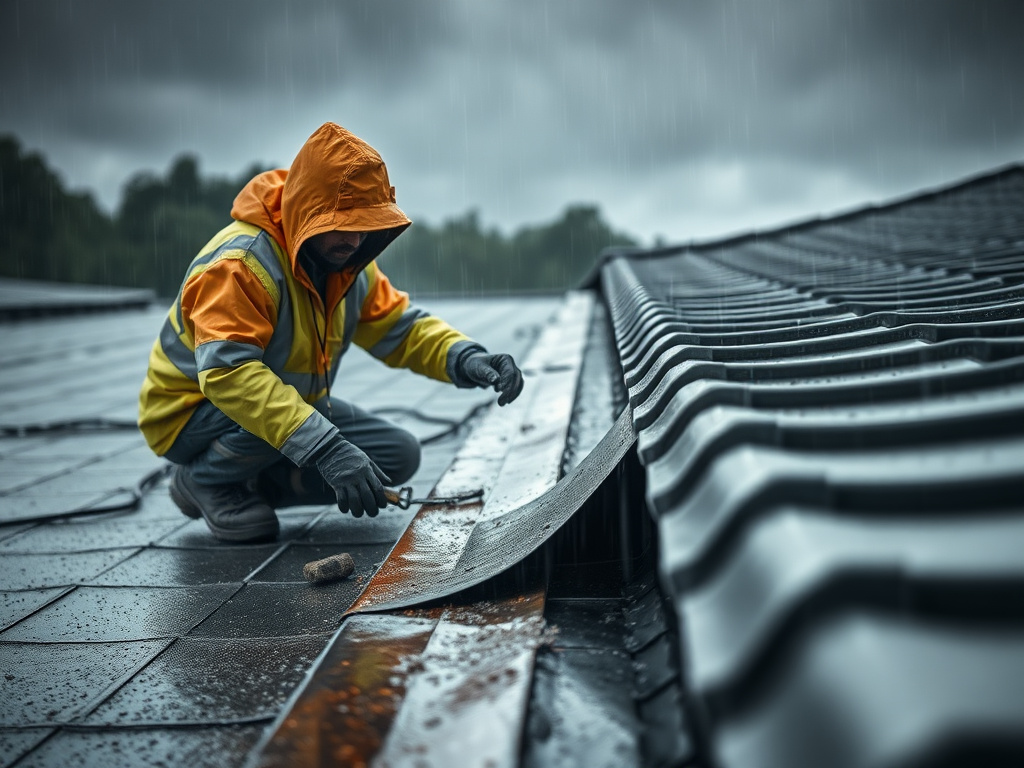
Rapid response, nationwide
Emergency EPDM Leak Response That Doesn't Create a Second Problem
An active leak doesn't wait for a scheduled repair — but the wrong stopgap can leave you with two problems instead of one: the water that's already inside, and a temporary material that jeopardizes the permanent repair's eligibility under your roof's manufacturer warranty. Our emergency response is built around materials and methods that hold up when the permanent repair — and any warranty review behind it — happens.
The problem with "just stop the water"
Why Most Quick-Fix Materials Aren't Warranty-Safe
When water is actively entering a building, the instinct is to reach for whatever stops it fastest — a tarp, a bucket of roofing cement, a can of spray sealant, a roll of flashing tape from a hardware store. Every one of those materials will, in fact, slow down or stop water for a while. None of them are on the approved-materials list for a manufacturer-warrantied EPDM roof, and that gap matters more than it looks like at 2 a.m. during a storm.
Asphalt-based roofing cement and most generic mastics are the most common offender. They bond well to almost anything in the short term, which is exactly the problem — asphaltic compounds migrate into the EPDM membrane surface and leave a residue that can prevent a proper seam adhesive or splice tape from bonding correctly later, even after the temporary material is scraped off. The temporary fix is gone; the contamination it left behind isn't.
Generic silicone caulk and spray-can sealants create a related issue: most aren't chemically compatible with EPDM's rubber compound, and a manufacturer's field inspector reviewing a warranty question can flag the area as an unapproved repair even if the material never actually failed. For warranty purposes, using the wrong material is treated the same as the wrong material failing.
There's also a crew problem, separate from the material problem. Many emergency or storm-response outfits sub out the initial stabilization to whoever's available fastest, without confirming whether that crew is the certified installer of record — or even aware the roof carries a national-account program from a major EPDM manufacturer. On a roof where the warranty specifically requires certified-contractor work, that alone can be a compliance issue, regardless of how the repair physically holds up.
None of this means "wait for the perfect repair while the building floods." It means the emergency response itself has to be planned around what a warranty-compliant temporary fix actually is — see our warranty-compliant patch and repair materials — rather than defaulting to whatever a generic storm-response crew carries on the truck. A leak stopped today with the wrong material can turn into a warranty argument months later, at the exact moment you need that warranty to hold.
What "warranty-safe" actually means
What a Warranty-Safe Temporary Repair Looks Like
A temporary repair isn't judged by how long it lasts — it's judged by whether it creates a problem for the permanent, manufacturer-approved repair that follows it. That standard shapes every material and decision on an emergency call.
In practice, it comes down to the checklist an estimator or field technician actually runs through before touching the membrane — not a general promise to "use good materials."
- ✓Temporary materials chemically compatible with EPDM — no asphalt-based cement, generic silicone, or unrated spray sealant that can contaminate the membrane surface
- ✓Mechanical stabilization (weighted cover, termination bar, temporary batten) preferred over adhesive-based quick fixes wherever the manufacturer or membrane condition is still being confirmed
- ✓Photo documentation of the pre-repair condition before any material contacts the roof, timestamped for the warranty file
- ✓A crew qualified to perform certified-program work, not a generalist storm-response sub with no manufacturer-program familiarity
- ✓A defined scope for the permanent repair — method, material family, and rough timeline — agreed on before the crew leaves site
- ✓Written notes on exactly what temporary material was used, where, and why, added to the roof's ongoing documentation record
How the call actually goes
Rapid-Response Process
Three things have to happen on an emergency call, in order, without skipping the middle one just because the first and third feel more urgent.
Rapid Assessment & Triage
A short intake call gets the essentials — symptom, location, interior exposure, and whatever's known about the roof's manufacturer or warranty status. That last detail changes which materials are even on the table for the visit.
On-Site Stabilization
The technician confirms the leak source, protects interior contents, and applies a warranty-safe temporary stabilization method matched to the membrane — not a default kit used on every call regardless of roof type.
Manufacturer / Warranty Check
Where the manufacturer or program is known or can be identified from existing paperwork, we confirm what a compliant permanent repair needs to look like before scheduling it — rather than guessing and re-doing work later.
Permanent Compliant Repair
The scheduled follow-up performs the actual manufacturer-approved repair — seam splicing, patch material, or certified-program work — removing the temporary stabilization entirely rather than building over it.
Documentation Handoff
Photos, materials used, and dates from both visits are compiled into the roof's warranty file, closing the loop instead of leaving an undocumented gap in the record.
Who gets a phone call
Coordinating With the Manufacturer or Warranty Holder on Emergency Work
A meaningful share of NDL, system, and material warranties include a notice requirement — the property owner or an authorized contractor is expected to report roof damage and repair activity within a defined window, not just fix it and move on. That requirement doesn't pause for an emergency; if anything, an emergency is exactly the scenario the notice clause was written for.
Part of an emergency call, where the manufacturer and warranty terms are known or can be quickly confirmed, is identifying whether that notice step applies and handling it as part of the visit — not leaving it as a surprise the building owner discovers during a future warranty question. Where the manufacturer isn't yet known, that identification becomes step one of the permanent-repair planning rather than an afterthought.
This is also where a missing or incomplete warranty file becomes its own kind of emergency. A property that has changed management, been sold, or simply lost its original paperwork over the years may not have a clear answer to "who's the manufacturer and what does the warranty require" — which means the emergency technician is sometimes doing basic warranty-file reconstruction in the middle of a leak call, not just fixing the roof.
That's a large part of why we treat emergency response and ongoing documentation as connected services rather than separate line items — see roof warranty documentation programs for how an existing inspection and records program removes most of that uncertainty before an emergency call ever happens. If you're not sure what your roof's warranty currently requires, that's a reasonable thing to find out before the next leak, not during it.
Ready to get ahead of the next call? Start a free warranty-safe assessment and we'll confirm your roof's manufacturer and warranty status alongside any active repair need.
Before you call
Emergency Response, Answered
Quick answers to the questions we hear most on an active-leak call. For anything specific to your roof, calling is still faster than reading.
Call 844-967-5247Is it safe to use a tarp or a hardware-store patch on a warrantied roof during an active leak?
+
A tarp used purely as a temporary weather barrier — weighted or mechanically secured, not glued to the membrane — is generally low-risk. Adhesive-based products are the bigger concern: asphalt-based cement, generic silicone, and spray sealants can contaminate the membrane surface or flag as an unapproved material if a manufacturer later reviews the repair. If you've already applied something before calling us, tell us exactly what it was — that changes how the permanent repair is planned, not whether we can still help.
How fast can you respond to an emergency EPDM leak?
+
Response time depends on location and crew availability, but active-leak calls are prioritized ahead of scheduled work. Call rather than submit a form if water is actively entering the building — we'll triage by phone immediately and get a crew moving while confirming the roof's manufacturer and warranty status.
What if a different contractor already used the wrong material before you arrived?
+
It happens more often than you'd think, and it isn't necessarily unrecoverable. Depending on the material and how long it's been in place, the affected area may need additional surface preparation before a compliant splice or patch can bond correctly. We document the existing condition first, then scope the permanent repair around what's actually salvageable.
Do you work directly with property managers, facility managers, and GCs, not just building owners?
+
Yes. A large share of emergency calls come from a property manager or facilities director acting on an owner's behalf, not the owner directly. We're set up to take instruction from whoever is authorized to make the call, and to loop in the building owner or warranty holder on documentation afterward.
Have an active leak right now?
Call first. We'll walk you through warranty-safe interim steps on the phone while a crew is dispatched, so nothing touches the roof that could complicate the permanent repair.