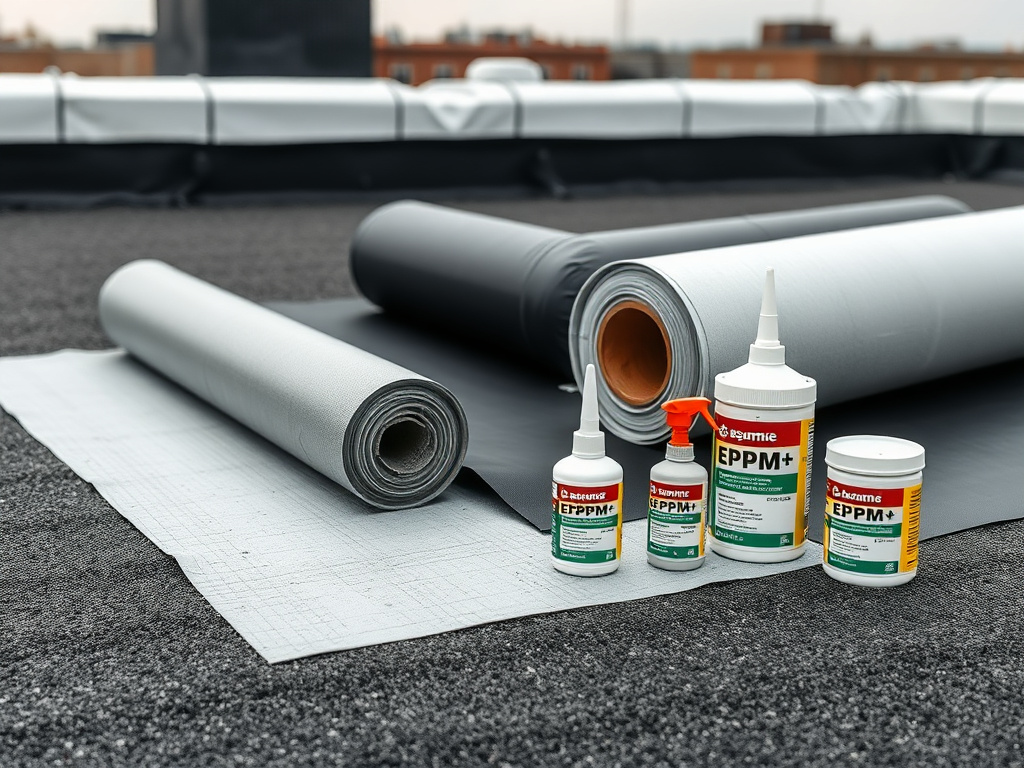
Why "it's all EPDM" is a myth for warranty purposes
EPDM — ethylene propylene diene monomer — is a rubber compound, not a single branded product. Every major manufacturer formulates its own version of that compound, and more importantly, formulates the primers, adhesives, and tapes meant to bond a repair to it. That's the part the "it's all EPDM" assumption misses: the membrane sheet is only half of a patch. The other half is a chemistry system — a primer and adhesive engineered to react with one specific membrane formulation.
Two patch kits that look nearly identical on a shelf can use meaningfully different adhesive chemistry underneath. A generic, general-purpose EPDM patch kit sold for broad compatibility is a reasonable product for a residential pond liner or a DIY backyard fix. It was not necessarily formulated to bond to the specific membrane compound your commercial roof's manufacturer installed — and on a roof still under an active warranty, that distinction is the entire ballgame.
Adhesive and primer chemistry, in plain language
You don't need a chemistry degree to understand why this matters — just the basic mechanism. A patch bonds to the existing membrane in one of two ways:
- Adhesive bonding — a layer of adhesive (often applied after a primer) sits between the existing membrane and the new patch material, chemically gripping both surfaces. This is the common method for patching cured, fully vulcanized EPDM.
- Co-curing / fusion bonding — uncured (non-vulcanized) EPDM patch stock can chemically fuse with an adjacent cured sheet under the right primer and pressure, essentially becoming one continuous piece of rubber at the bond line rather than two pieces held together by a glue layer.
These are different mechanisms, and a product designed for one doesn't reliably work for the other. A generic patch kit rarely specifies which mechanism it uses, or which membrane cure state it's rated for — which is exactly the information a compliant repair depends on.
Cured vs. uncured stock: why it changes everything
Most of the field membrane on an older EPDM roof is cured — fully vulcanized rubber sheet, the material most people picture when they think of a rubber roof. But certain details — factory seams, some flashing accessories, and specific manufacturer splice components — use uncured stock. A patch material has to be matched not just to the manufacturer, but to the cure state of the membrane at the exact repair location, which can vary across a single roof.
Using a cured-membrane patch system on an uncured detail (or the reverse) is one of the most common ways a repair looks fine on install day and fails months later — not because the crew did sloppy work, but because the product wasn't formulated to bond to that substrate in the first place.
Manufacturer-approved vs. generic: a side-by-side comparison
The table below lays out the practical differences that matter most on a warrantied commercial roof.
| Adhesive chemistry | Manufacturer-approved patch kits use a primer and adhesive formulated for that manufacturer's specific membrane compound. Generic hardware-store kits typically use a general-purpose rubber cement or contact adhesive designed to bond broadly, not to match one membrane's chemistry. |
|---|---|
| Cure state compatibility | Approved systems specify whether the patch stock and adhesive are meant for cured (vulcanized) or uncured membrane, because the two bond through different mechanisms. Generic kits rarely make this distinction on the label at all. |
| Documentation trail | Approved materials come with a lot number, product data sheet, and — when installed by a certified contractor — a record that ties the repair to the manufacturer's approved-products list. Generic materials leave no such trail. |
| Warranty standing after use | Using an approved system on a warrantied roof preserves the existing material and workmanship warranty coverage. Using an unlisted generic product at a repair location is one of the most common reasons a warranty claim gets denied at that location. |
| Short-term appearance | Both can look identical immediately after installation. The difference typically shows up months later, as a bond-line failure at the patch edge rather than as an obvious visual defect at install. |
General, brand-agnostic patterns across major EPDM manufacturer lines — confirm your roof's specific manufacturer and warranty tier before a repair is scheduled.
Six questions to ask a contractor before a patch repair
The fastest way to sort a warranty-safe repair from a generic one isn't inspecting the product label yourself — it's asking the contractor the right questions before the truck even shows up. A contractor working from an approved system will have specific, confident answers to all of these.
- ✓Which manufacturer's membrane is on this roof, and is the patch material on that manufacturer's approved-products list?
- ✓Is the patch stock rated for cured or uncured membrane, and has the installer confirmed which one is at this repair location?
- ✓What primer or adhesive is included in the kit, and is it the primer that manufacturer specifies for this membrane compound?
- ✓Will the installer document the product name and lot number as part of the repair record?
- ✓Is the installer certified under that manufacturer's contractor program, or working from general repair experience only?
- ✓If the roof is under an NDL or system warranty, has the manufacturer's inspection or notification requirement been met before the patch is installed?
Where generic patch materials actually come from
It helps to understand why generic kits exist at all. Most general-purpose EPDM patch products are manufactured for the broadest possible market — pond liners, irrigation equipment, DIY residential fixes, and small non-warrantied outbuildings. That's a legitimate market, and those products aren't defective for their intended use. The issue is purely one of fit: they're formulated for average-case compatibility across many membrane types, not for chemical matching to one manufacturer's specific commercial roofing compound. A supply house or hardware distributor selling that product has no reason to track — and usually doesn't track — which manufacturer's approved-products list it appears on, because that's not the market the product was built for.
Manufacturer-approved patch systems, by contrast, are typically sold through a narrower distribution channel tied to the manufacturer's certified-contractor network, often bundled with the primer and application instructions specific to that product line. That's part of why sourcing matters as much as the product itself — the same membrane compound purchased through two different channels can arrive with two completely different compliance statuses attached.
What this looks like in practice
On a roof under an active material-only warranty, using an unlisted generic patch at one location typically puts that location — and sometimes the surrounding area — outside the manufacturer's approved-products requirement, which is the first thing an evaluator checks if a warranty question ever comes up. On a roof under a certified-contractor NDL or system warranty, the requirement is stricter still: both the material and the installer's certification status get checked.
It's also worth being honest about the cost comparison, because it's usually smaller than people expect. A manufacturer-approved patch kit isn't dramatically more expensive than a generic one in most cases — the real cost difference shows up only if a non-compliant repair later triggers a denied warranty claim on a much larger scope of work. Judged against that downside, insisting on approved materials on every visit is close to a free decision.
None of this means every repair requires exotic, hard-to-source materials. It means the patch material and the installer's knowledge of which system applies to your specific roof are the actual product being purchased — the visible patch is just the result of getting that decision right. For a deeper look at how patch and splice materials are selected and documented for a specific manufacturer's program, see our page on warranty-compliant patch materials. If your roof carries a certified-installer NDL or system warranty, our manufacturer-certified repair programs page covers how those program requirements typically work.
Frequently asked questions
Is all EPDM patch material basically the same?
+
No. EPDM sheet stock can look and feel similar across brands, but the primer and adhesive systems used to bond a patch to the existing membrane are formulated per manufacturer and, often, per product line. A patch that isn't chemically matched to the original membrane can look fine at installation and still fail at the bond line later.
What's the difference between cured and uncured EPDM patch stock?
+
Cured (fully vulcanized) EPDM is finished material that bonds to another surface through an adhesive or tape layer. Uncured (non-vulcanized) EPDM can chemically co-cure and fuse to an adjacent cured sheet under the right primer and pressure. They're not interchangeable — a patch system built for one substrate doesn't reliably bond to the other.
Can a generic patch void my roof's warranty?
+
It can, if the roof is under an active manufacturer warranty that requires approved materials and, in many cases, a certified installer. Manufacturers generally evaluate a warranty claim at a given location by checking whether the products used there appear on that program's approved list — an unlisted generic patch is a common reason a claim is denied at that specific spot.
How do I know if a contractor is using the right materials?
+
Ask directly which manufacturer program the materials are approved under, request the product data sheet, and ask whether the installer is certified for that manufacturer's repair program. A contractor who can answer specifically — not just "it's rated for EPDM" — is generally working from an approved system.