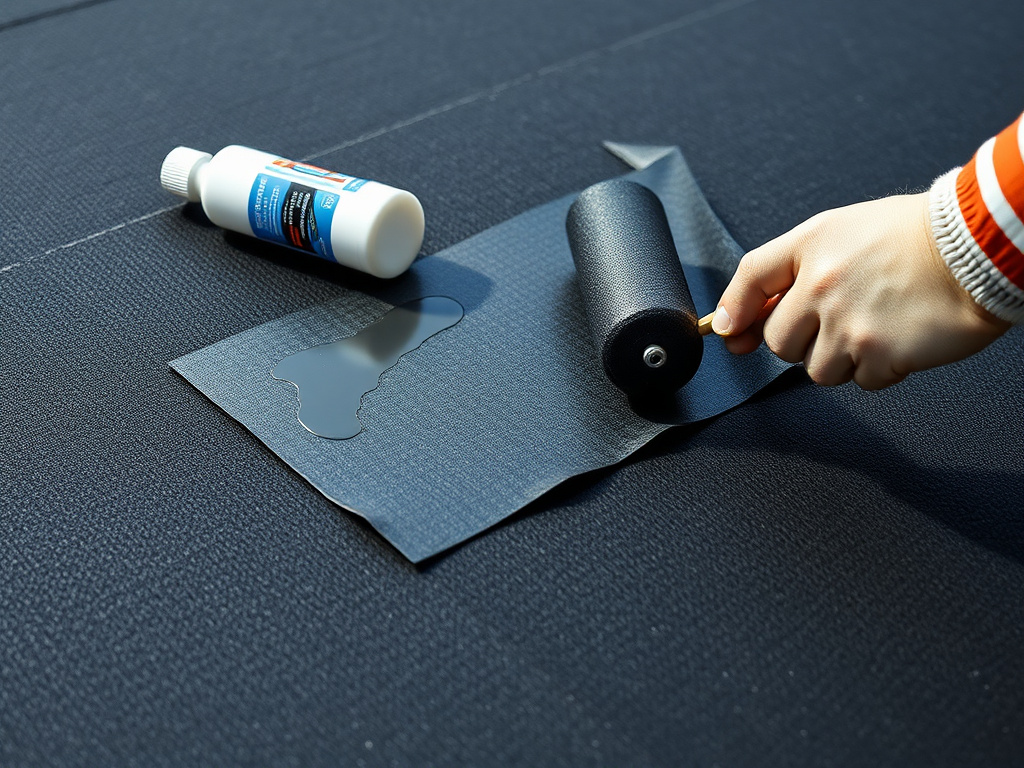
A leaking rubber roof creates urgency, and urgency is exactly when warranty compliance gets skipped — not out of carelessness, but because the fastest fix and the manufacturer-approved fix aren't always the same fix. Below are seven repair habits that show up again and again on warrantied EPDM roofs, along with what a compliant version of each one looks like.
1. Generic hardware-store patch kits
A general-purpose EPDM patch kit from a hardware store or general building-supply outlet is built for broad compatibility, not for one manufacturer's specific membrane chemistry. On a warrantied roof, using a kit that doesn't appear on the manufacturer's approved-products list is one of the fastest ways to put that repair location outside warranty coverage — even if the patch itself holds up physically for a while.
Compliant alternative: confirm the roof's manufacturer first, then use a patch system from that manufacturer's approved-products list, matched to the membrane's cure state at the repair location. See our page on warranty-compliant patch materials for how that matching process works.
2. Mismatched adhesive and primer chemistry
Even when the patch membrane itself is an acceptable brand, pairing it with the wrong primer or adhesive is a separate and easy-to-miss error. Primers and adhesives are formulated to react with a specific membrane compound — a mismatched combination can look properly bonded at installation and still fail at the bond line months later.
Compliant alternative: use only the primer and adhesive combination specified for that membrane by its manufacturer, and confirm the product data sheet before the repair — not after a bond failure shows up.
3. Uncertified installers on a certified-program roof
If your roof carries an NDL or system warranty, it was almost certainly issued through a manufacturer's certified or authorized-contractor program. Handing a repair to a general roofing contractor who isn't certified under that specific program — even a skilled, well-reviewed one — can put the certified-program warranty at risk, regardless of how well the repair itself is executed.
Compliant alternative: confirm the warranty tier before selecting a contractor, and for NDL or system-warrantied roofs, verify the contractor's current certification status with that specific manufacturer. Our page on manufacturer-certified repair programs covers how these programs are structured.
4. Skipped required inspections
Many NDL and system warranties require periodic inspections — sometimes annual — performed or documented in a specific way to keep the warranty active. It's an easy requirement to let lapse, especially on a roof that isn't showing obvious problems. But a missed required inspection is exactly the kind of gap manufacturers check for when a claim is eventually filed.
Compliant alternative: track required inspection intervals as part of the roof's ongoing warranty file, not as an afterthought triggered by a visible leak.
5. Undocumented drainage changes
Adding a rooftop unit, rerouting a downspout, or altering drainage in any way changes how water moves across the membrane — and most manufacturer warranties carry a ponding exclusion that becomes relevant fast if a modification isn't documented and, in some cases, pre-approved. An undocumented change that leads to new ponding is a common and often overlooked source of warranty exposure.
Compliant alternative: document any drainage-affecting modification as part of the roof's warranty file, and correct ponding conditions through proper drainage work rather than letting standing water become the roof's new normal.
6. Non-compliant fastening at flashing details
Parapet walls, curbs, drains, and penetrations are where most EPDM leaks actually originate, and they're also where fastening requirements are most specific — fastener type, spacing, and pattern are often called out explicitly in a manufacturer's installation and repair standards. A repair that uses the right membrane but the wrong fastening approach at a detail can still fall outside compliance.
Compliant alternative: treat flashing and penetration repairs as detail work requiring the manufacturer's specific fastening pattern, not a generalized field-membrane repair approach applied to a detail it wasn't designed for.
7. "Helpful" maintenance-crew quick fixes
A building's in-house maintenance staff spotting a small blister or seam lift and sealing it with whatever's on hand — roofing cement, a tube of sealant, a leftover patch from a different job — is one of the most common and best-intentioned causes of warranty exposure. It's rarely documented, rarely uses an approved product, and often happens without anyone realizing it could affect the roof's warranty standing at all.
Compliant alternative: set a clear internal rule that any EPDM repair, however minor it looks, goes through the roof's designated certified contractor and gets logged in the warranty file — not handled ad hoc by whoever notices it first.
The pattern behind all seven
None of these seven items are unusual or negligent decisions in isolation — they're the kind of practical, in-the-moment choices that make sense when the immediate goal is stopping water from coming in. What they share is a common blind spot: none of them start with confirming the roof's manufacturer, warranty tier, and approved-repair requirements before work begins. Building that confirmation step into every repair request, no matter how small, is the single highest-leverage habit for keeping a warranty intact over the roof's full service life.
If you're not sure whether a past repair on your roof falls into one of these categories, that's worth checking before the next one happens. See our comparison page, warranty-compliant repair vs. DIY & uncertified repair, for how manufacturers typically evaluate a roof's repair history when a warranty question comes up.
Frequently asked questions
Will one small unapproved patch really void my whole roof warranty?
+
It depends on the warranty tier. On a material-only warranty, the effect is often limited to the repaired location. On a certified-contractor NDL or system warranty, manufacturers frequently review the roof's full repair and inspection history when a claim comes up — so an undocumented, non-compliant repair anywhere on the roof can become relevant to the whole system's standing, not just the patched spot.
How do I find out if a past repair on my roof was compliant?
+
Start with whatever repair records exist — invoices, product labels, photos — and compare the materials named against your roof manufacturer's approved-products list for that program. If records are missing or unclear, a warranty-compliance inspection can usually identify non-compliant work by examining the patch material, adhesive residue, and fastening pattern directly.
Can I fix these issues after the fact, or is the warranty gone for good?
+
Many issues can be corrected going forward — replacing a non-compliant patch with an approved one, documenting a previously unrecorded drainage change, or scheduling a lapsed required inspection. Whether that restores full warranty standing depends on the specific manufacturer's program and how the original issue was handled, so it's worth a direct compliance review rather than assuming either the best or worst case.